- Home
- Procedures
- face, eyes & nose
- Nose Revision
Nose Revision
WOOA Plastic Surgery is in HM Tower on Gangnam-daero, close to Sinnonhyeon and Gangnam stations. As a government-approved centre for international patients, we offer free online consultations, native-level interpreters and 24-hour urgent care support.
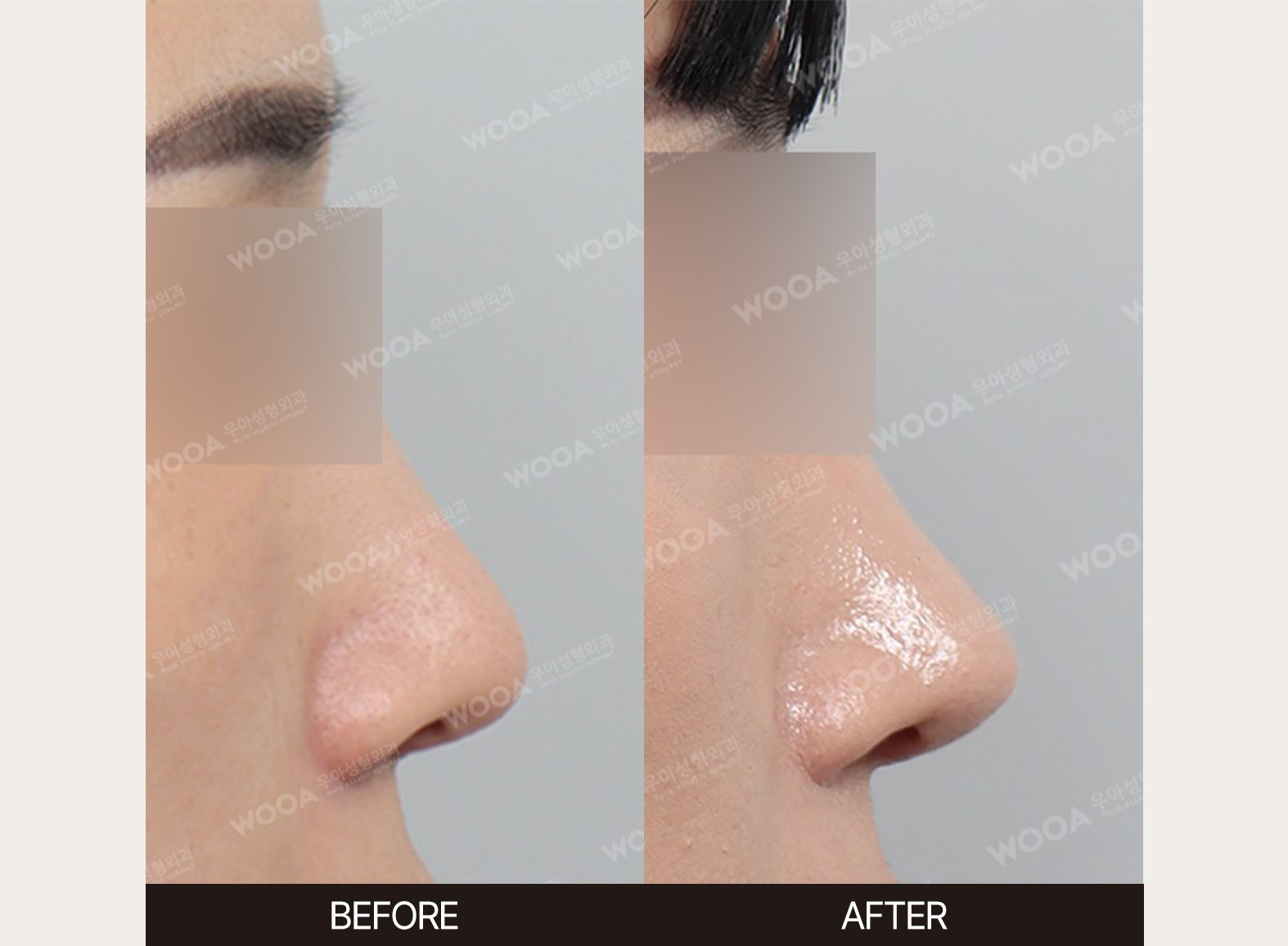
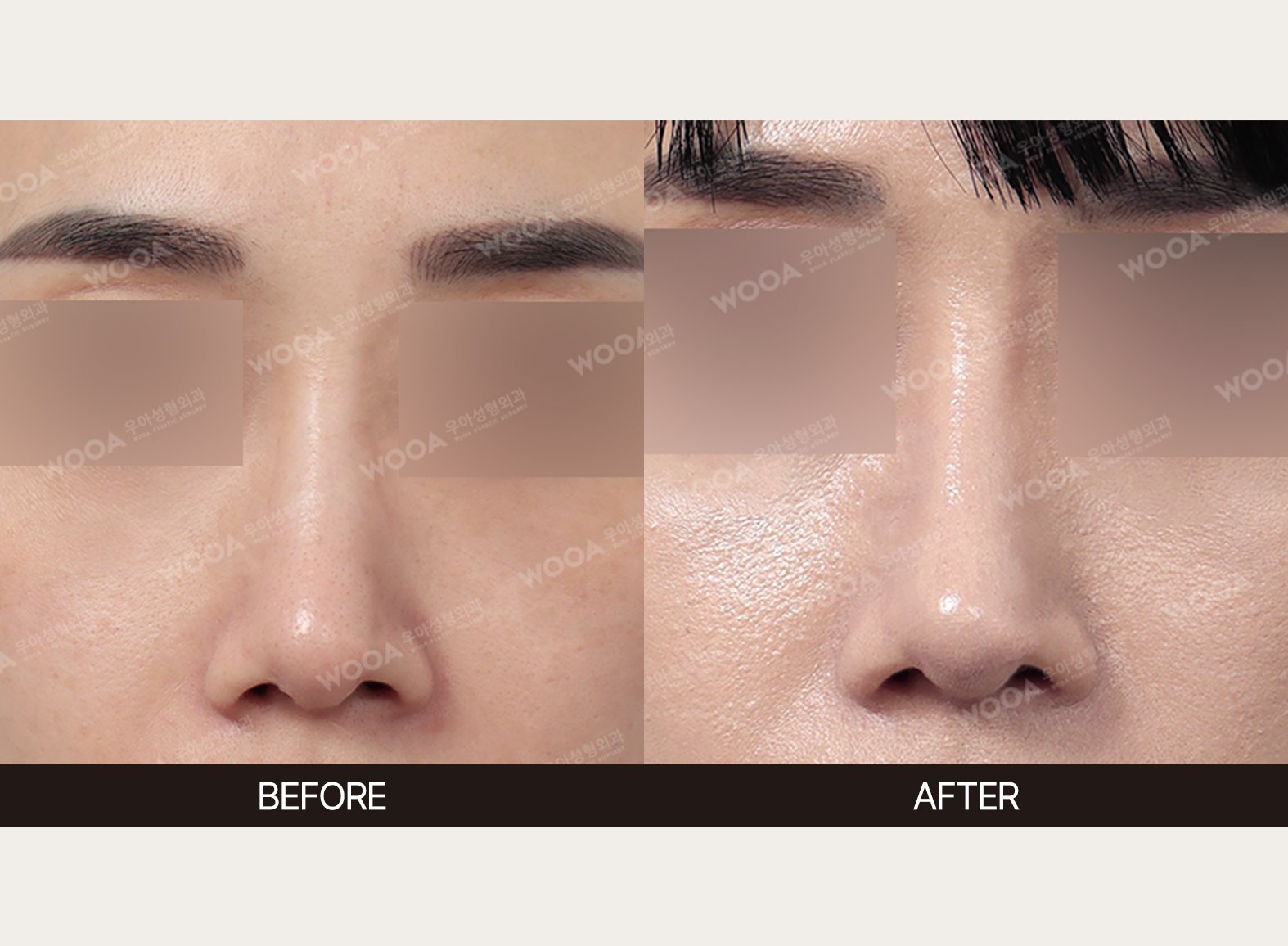
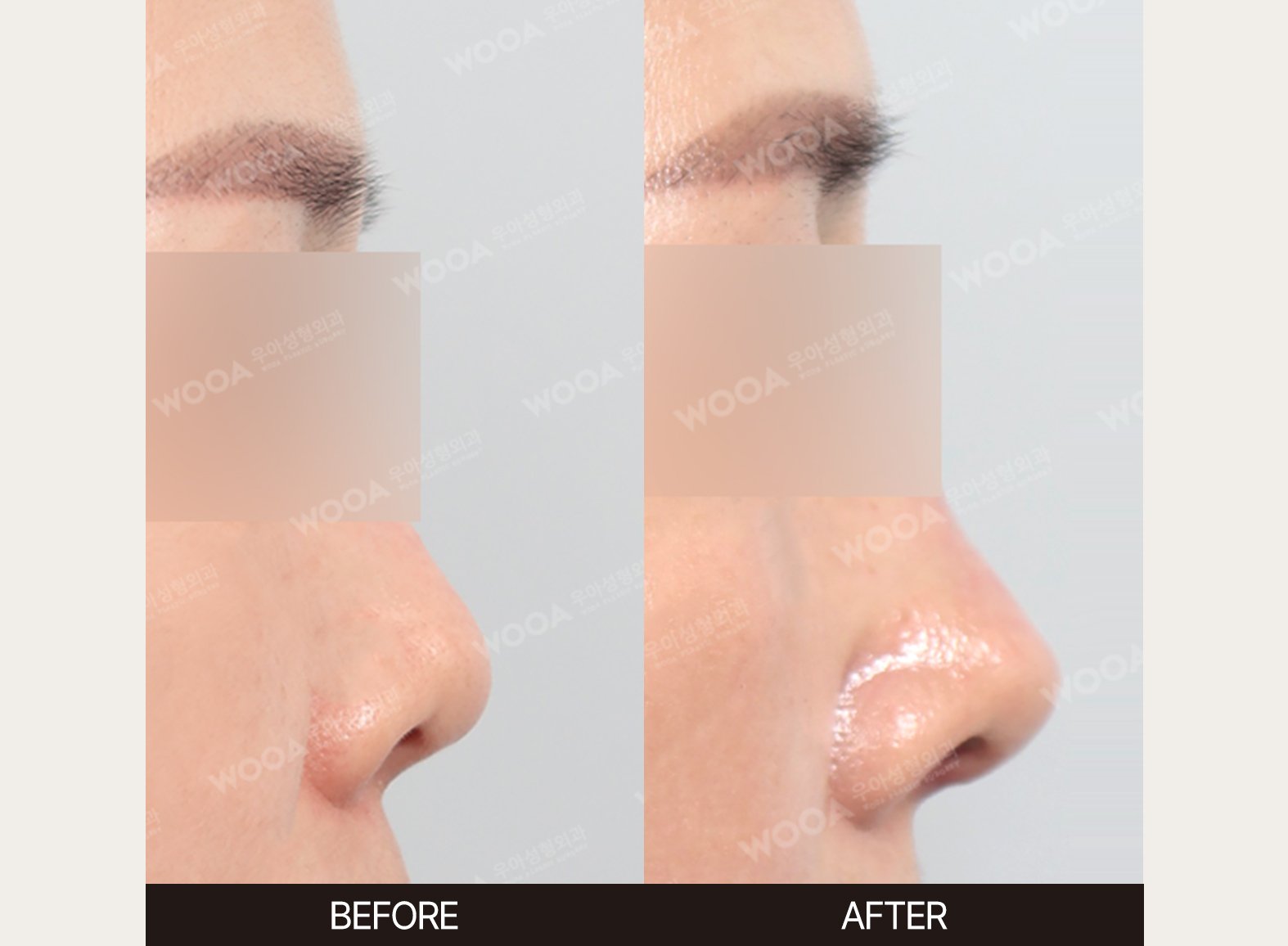
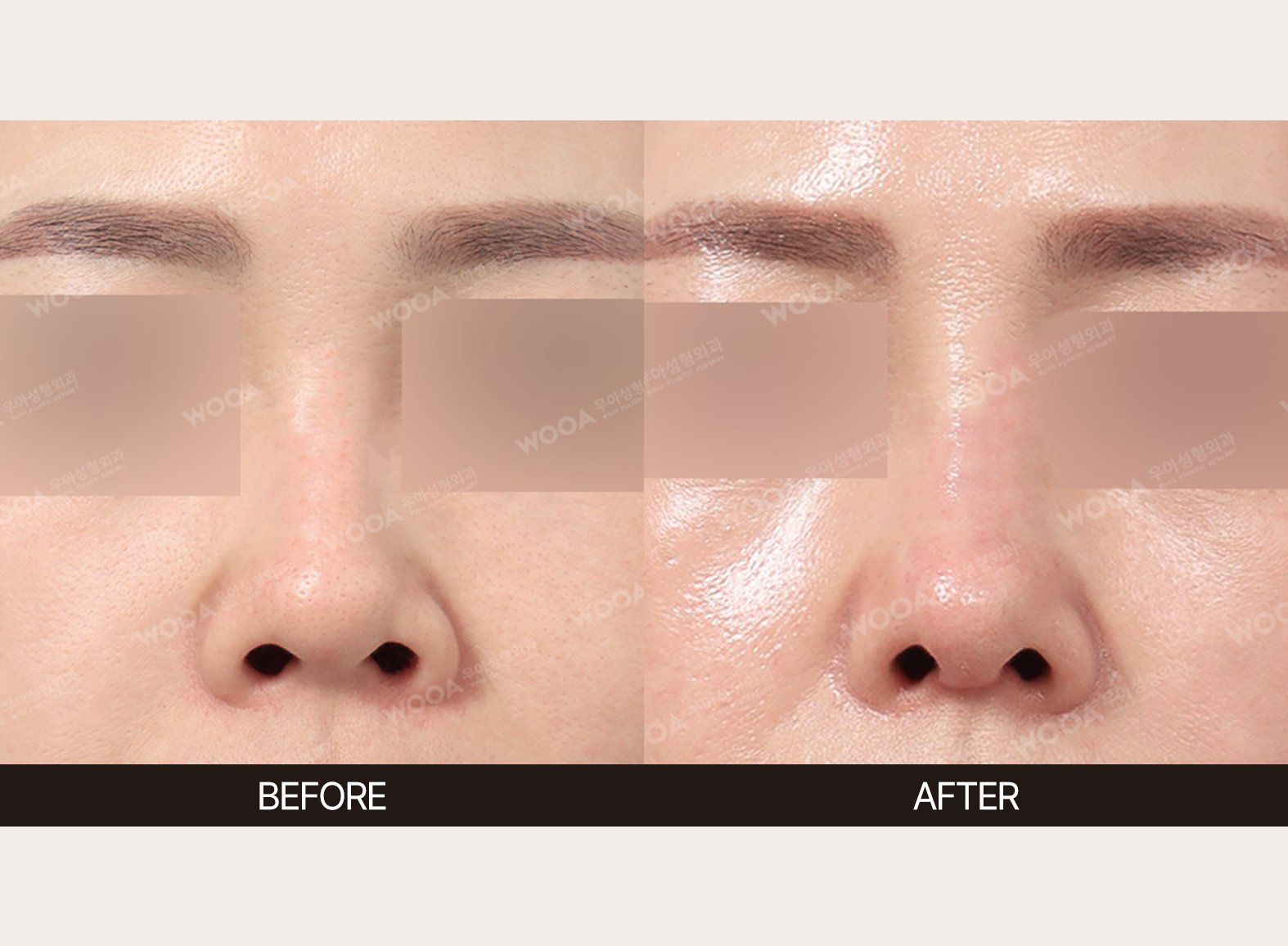
WOOA’s Nose Revision surgery is for patients who are unhappy with the shape or function of their nose after a previous operation. A nose that has already been operated on may have thinner skin, weakened cartilage and support, leftover implant traces or scar contracture, so revision needs far more detailed analysis and planning than a first rhinoplasty. We look at your overall facial proportions and the limits of your existing tissue to redesign a nose that balances function, stability and appearance, and we restore the lines you hoped for from the start.
Contents
What Is Nose Revision?
Nose revision (revision rhinoplasty) corrects problems that can follow an earlier nose surgery, such as implant displacement, contracture, a drooping tip, asymmetry or a change in shape. The key step is understanding the current nasal structure precisely: if the cause of the original change and the areas needing support are not addressed, the same problems can return. Revision is not about how much is changed, but how reliably the nose can be rebuilt.
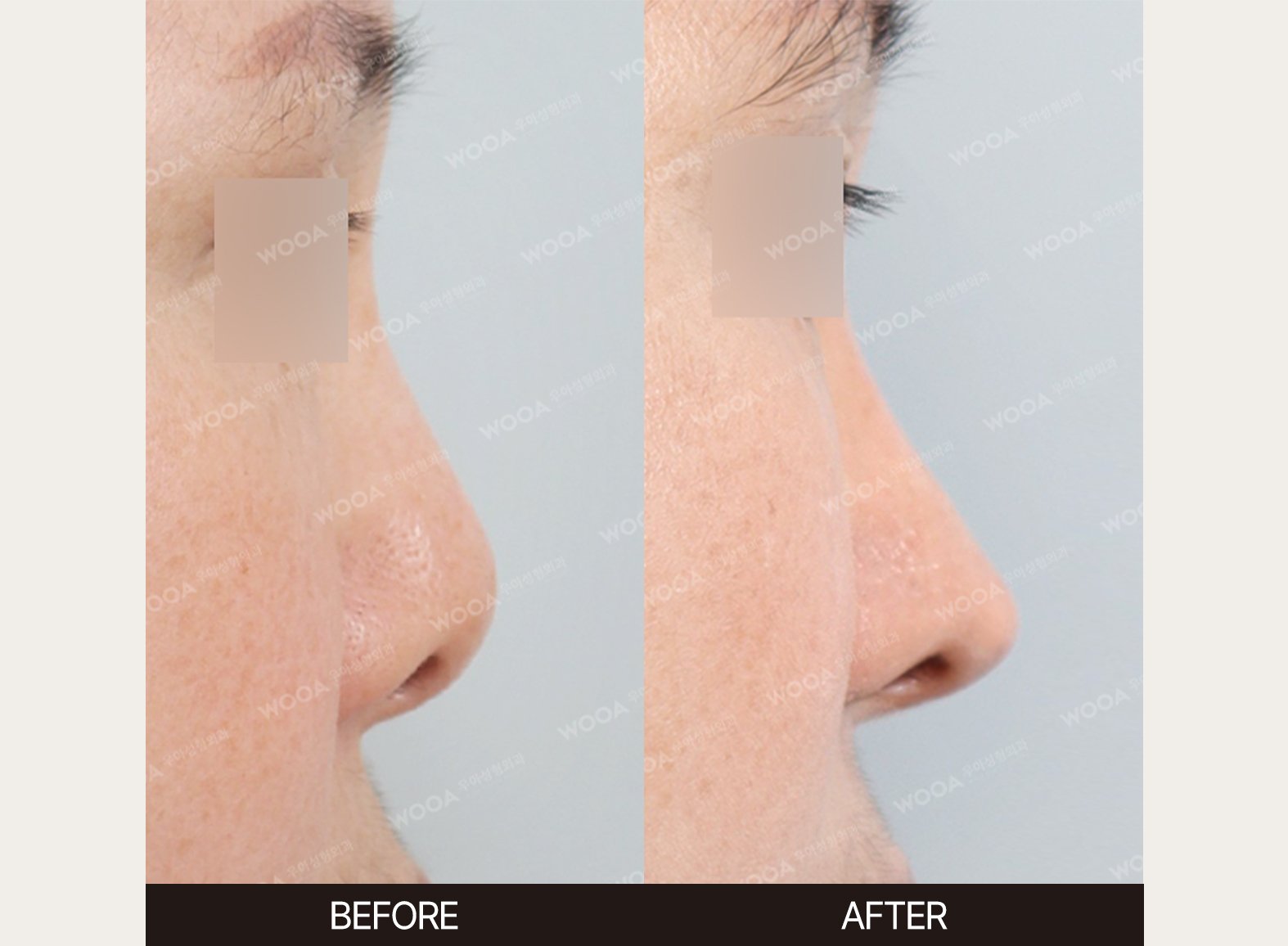
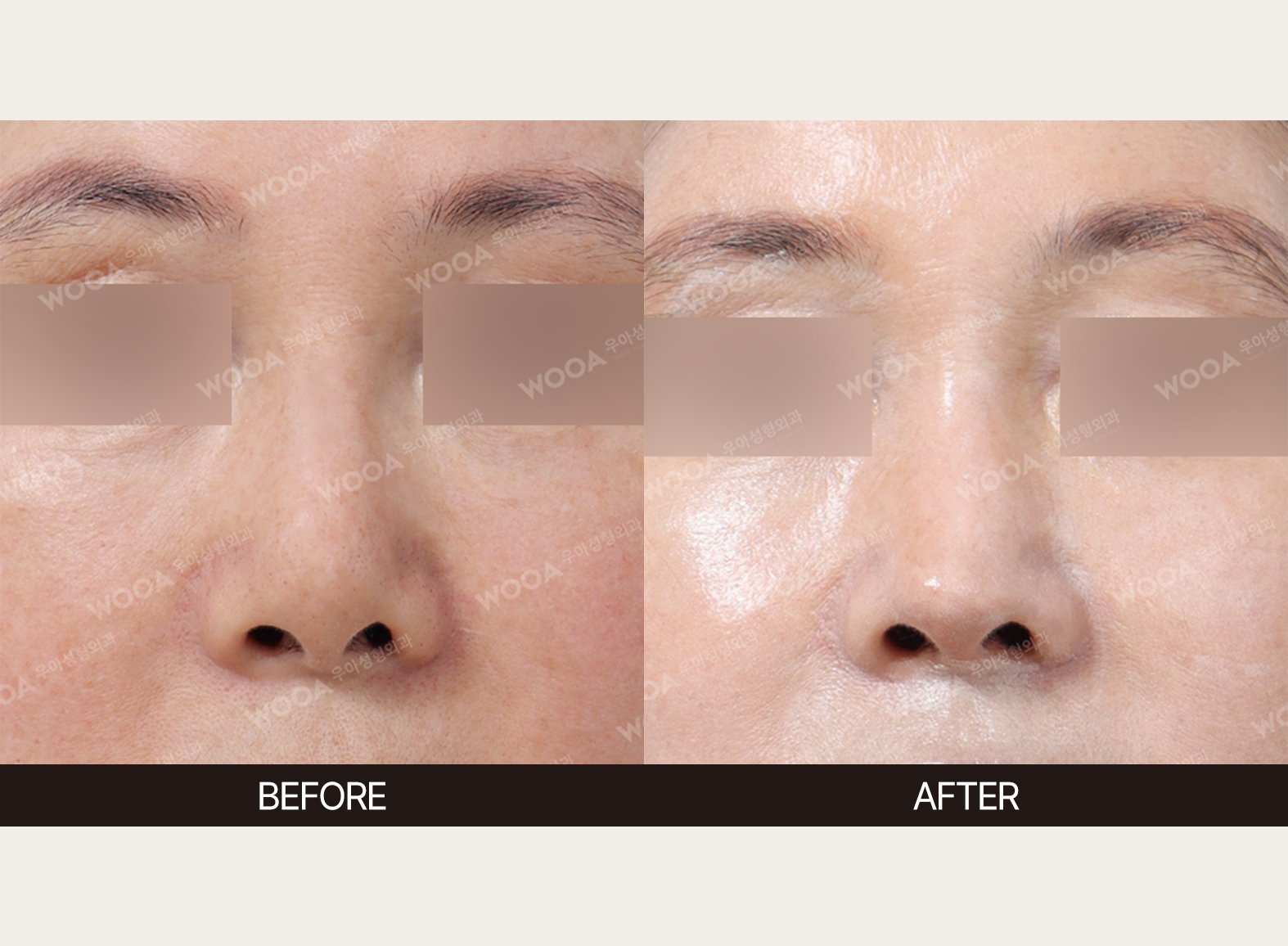
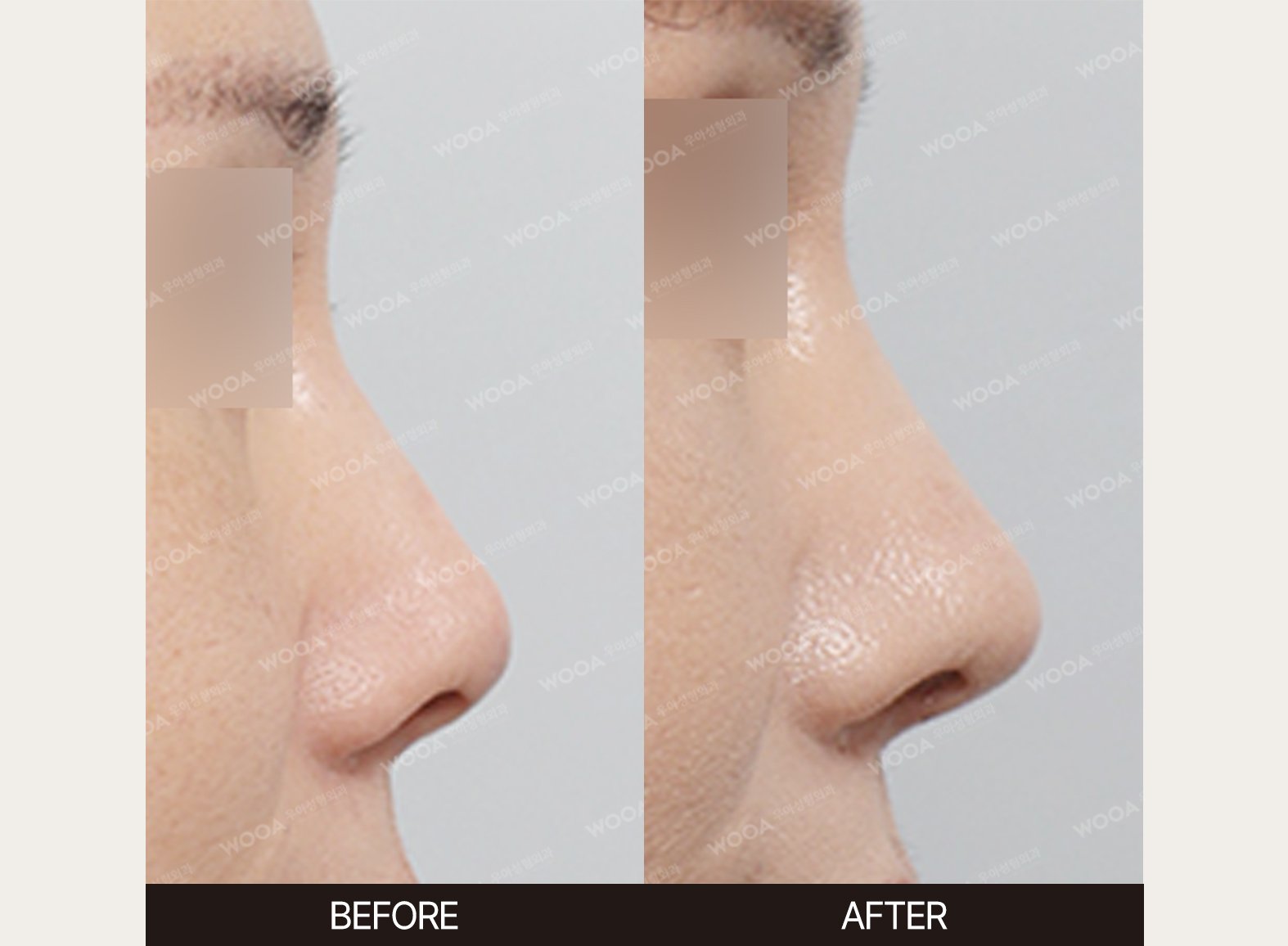
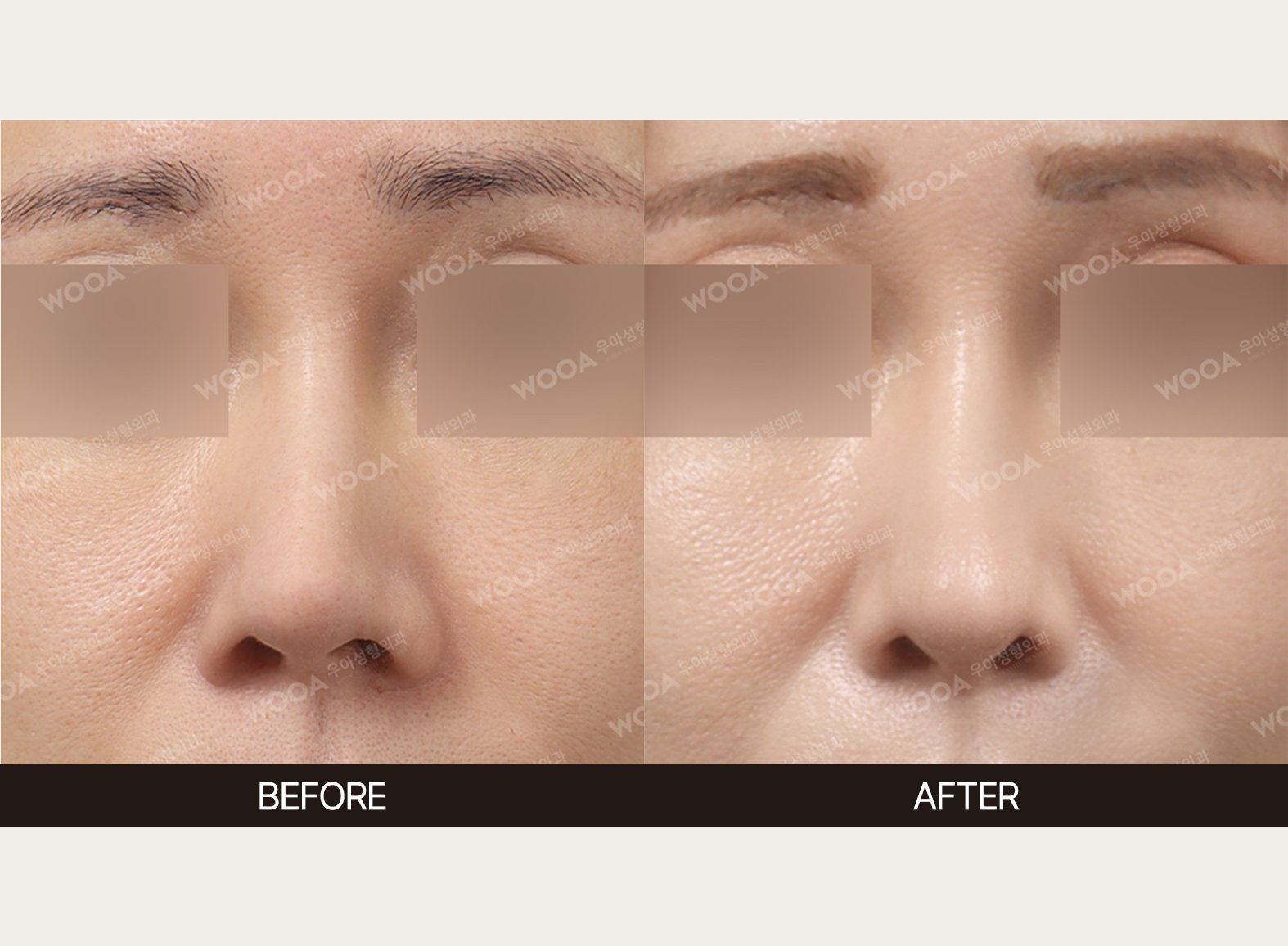
Who Is Nose Revision Recommended For?
Revision is worth discussing if you have:
- An unnatural shape: A nose that looks too high or does not suit your face.
- Implant problems: A bent, protruding or visible implant, especially under thin skin.
- Inflammation or contracture: Capsular contracture or ongoing inflammation, or a nose that has become asymmetric.
How WOOA Approaches Revision
- Identify the cause: The reason for revision is pinpointed precisely, working with specialists across fields.
- Restore function: The nose is treated as a functional organ, so discomfort caused by side effects is resolved, not just the shape.
- Materials:
- Own tissue first: Septal, ear or rib cartilage is used wherever possible.
- Combined support: A reliable, safe implant can be added alongside natural tissue when extra support is needed.
- Stable framework:
- Adequate support from the septum and cartilage is secured so the nose does not sag or deform over time.
- Incisions follow natural lines, and careful dissection protects soft tissue to minimise extra scarring.
- Safety: One-to-one surgery by a rhinoplasty specialist team, with an anesthesiologist on site and dedicated aftercare.
Common Revision Cases
- Distorted Implant
The implant is removed, the area reshaped, and a new implant matched to the bridge is anchored securely to the cartilage to prevent shifting.
- Drooping Tip
A support structure is built from septal cartilage to strengthen the tip cartilage, then cartilage is grafted to lift the tip.
- Nose Shortened by Contracture
After the implant is removed, the tissue is allowed about 6 months to soften; septal cartilage then lengthens the nose before a new implant is placed.
- Deformed Tip
Damaged tissue is removed and the tip is rebuilt with septal or ear cartilage to restore its shape.
- Unbalanced Bridge Height
The existing implant is replaced with one that suits the desired shape; if the bridge is too high, the nasal bones may be narrowed for a more natural line.
FAQ
How Long After the First Surgery Can Revision Be Done?
Minor cases, such as a simple bridge augmentation, may be revised within a few months. For most patients it is safest to wait at least 6 months, and 6 to 12 months where tissue has been significantly affected. Your surgeon will advise on timing.
Will Revision Leave More Scarring?
- Incisions are usually placed along natural lines or in well-hidden areas.
- Old scar tissue makes surgery more demanding.
- Careful dissection and soft-tissue preservation help minimise additional scarring.
Are Revision Results Long-Lasting?
A strong cartilage framework gives good long-term stability, although thin skin or cartilage weakened by earlier procedures can affect how long results last.